


Aydin Mehrage
What Parents Should Understand About a Growth Mindset
20 Jul 2026

Article Summary
A growth mindset helps students see challenges and setbacks as opportunities to adjust their habits, strategies, and approach, not as proof that they are incapable. Parents can encourage this by focusing conversations on the learning process, allowing children to work through manageable struggles, and giving specific praise that connects improvement to thoughtful action. These habits build adaptability, resilience, and confidence that benefit students both in school and throughout life.
When Children Struggle, It’s Critical to Keep A Growth Mindset.
As parents, our role is to motivate and incentivize our kids to become independent problem solvers. Many times, that process can seem challenging. When children struggle, it’s critical to keep a Growth Mindset.
Students often compare themselves to their peers. Even worse, our modern culture pushes the ideas of a “smart kid.” The “smart kid” seems to have predisposed gifts to accomplish a lot, so when students struggle to learn, they can feel like they’re not a smart student, and even worse, identify as a bad student
That is why the idea of a growth mindset matters so much.
A growth mindset is the belief that intelligence, skill, confidence, and resilience can be developed over time. It does not mean every child will become excellent at everything. It does not mean effort alone solves every problem. And it certainly does not mean we should dismiss stress, disappointment, or failure with a cheerful slogan.
To me, growth mindset means helping students understand that struggle is not proof that they are incapable. It is often the exact place where learning begins.

Why Growth Mindset Matters for Students
When students associate themselves with poor performance, either in a subject or at school overall, they are unlikely to focus on the habits that have caused poor performance in the first place. Furthermore, when the student feels “motivated,” they simply try harder: spend more time, put in more effort, do more practice.
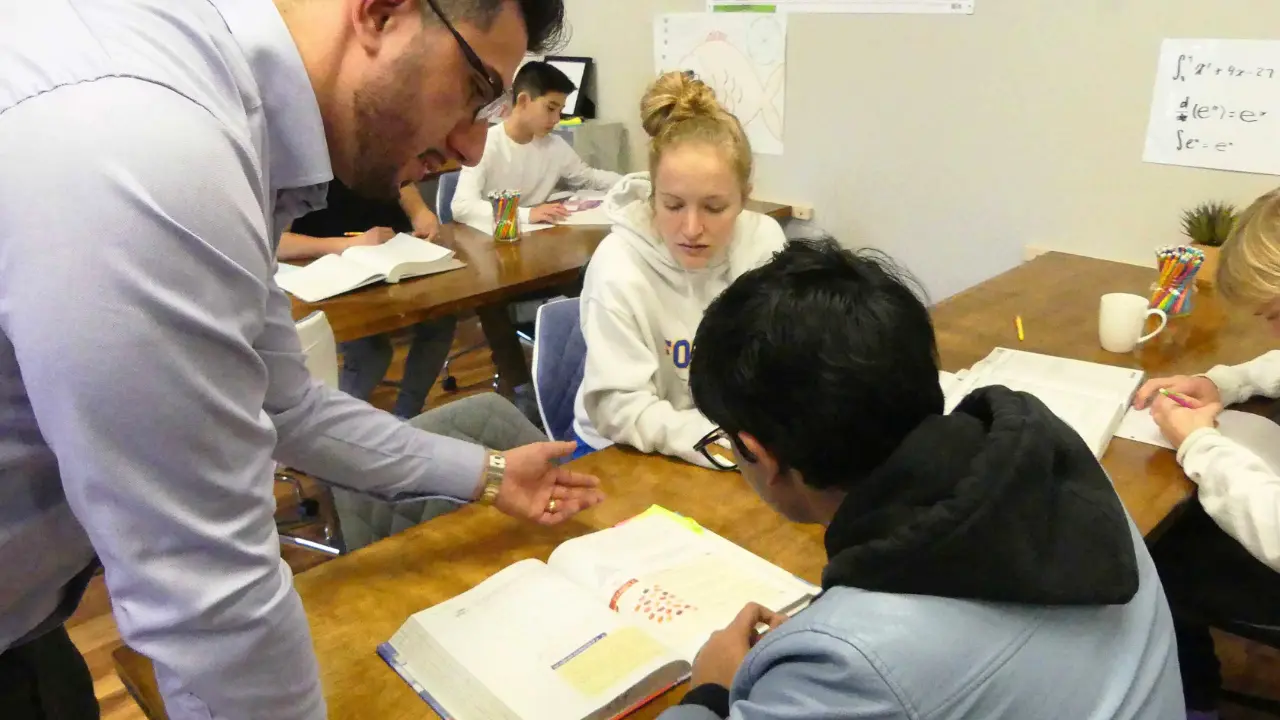
However, without fundamentally changing their study habits and how they approach the problem, the effort usually results in the same poor grades, reinforcing the perception that the student is simply incapable.
Alternatively, a student who has been trained on the Growth Mindset sees every point lost as an opportunity to examine their habits, rather than them as a person. The Growth Mindset student knows they are able but understands that habits need to be adapted to each teacher, class, and exam. By focusing on quickly changing how to approach the material, students become more adaptable and innovative in their learning.
Parents can help interrupt that pattern.
One of the most powerful things a parent can do is shift the conversation from outcome to process. Instead of focusing only on the grade, ask: What did you try? What changed from last time? Where did you get stuck? What would you do differently next time? These questions teach children that learning is active. They also help students build the habit of reflection, which becomes essential in adulthood.
Helping Students Build Resilience for the Future
A growth mindset also prepares young people for a future that will demand adaptability. Today’s students will enter careers where technology changes quickly, job paths are less linear, and success often depends on learning new skills repeatedly. The students who thrive will not always be the ones who had the easiest time in school. Often, they will be the ones who learned how to recover, adjust, ask better questions, and keep going.
For parents, the goal is not to remove every obstacle. In fact, too much rescuing can unintentionally teach a child that discomfort is dangerous. A healthier approach is to support them through the challenge while still allowing them to experience responsibility. When a child struggles, they need calm guidance, not panic. They need to hear, “This is difficult, but it is workable.”

The Kind of Praise That Actually Helps
I also believe parents should be careful with praise. Telling a child “You’re so smart” feels positive, but it can create pressure to keep proving that label. Praising effort is better, but even that can be incomplete. The most useful praise is specific: “I noticed you reviewed the problems you missed and changed your strategy.” That kind of feedback helps a student connect improvement to action.

Growth Mindset Is More Than an Academic Skill
Ultimately, growth mindset is not just an academic tool. It is a life skill. It helps young people face rejection, uncertainty, competition, and change without collapsing into the belief that one setback defines them.
Our children do not need us to convince them that adulthood will be easy. They need us to help them believe they can become stronger, wiser, and more capable as they meet it. That belief, practiced consistently, may be one of the greatest gifts we can give them.
Read More About a Growth Mindset in Diablo Magazine
To learn more about a growth mindset and how it impacts students in Pleasanton and the Tri-Valley, please read my editorial comments published in Diablo Magazine, June 2026
About the Author, Aydin Mehrage
Aydin Mehrage is a seasoned Pleasanton tutor and in-demand College Admissions Counselor who began his career in 2009. He has worked with students across the Tri-Valley area, including Pleasanton, Dublin, Livermore, and San Ramon. Aydin’s teaching background started at the university level, where he taught advanced college courses, and eventually he started a tutoring center to focus on students in middle and high school.
Aydin is passionate about making academic achievement feel accessible. He teaches with the belief that intelligence is built, not fixed, embracing a growth mindset in every session.